
Samen Seeds Graines Semi Semillas 種

[linguise]
Shopping cart
  • Your shopping cart is empty!

Shopping cart
  • Your shopping cart is empty!

Shopping Cart
  • Shopping cart is still empty

0 Wish List
Login
0 Compare
0 View shopping cart

Flame tree

4,55€

Price incl. VAT, excl. shipping
  • Manufacturer SAFLAX
  • Article number. 12334
  • Number of seeds 6
  • Botanical name Delonix regia
  • Product weight 10.00g

Propagation

Sowing seeds indoors is possible year-round. First, soak the seeds in a tray filled with room-temperature water for 12 hours. This increases their germination rate. Then, sow the seeds about half a centimeter deep in well-moistened potting soil. Cover the container with clear plastic wrap, perforated with holes. This protects the soil from drying out. Every two to three days, remove the wrap for two hours to prevent mold growth. Place the container in a bright, warm location at 20 to 25° Celsius (68 to 77° Fahrenheit) and keep the soil moist, but not wet. Germination should then occur fairly quickly, within 10 to 14 days. If the growing location is cooler, germination can sometimes take several weeks.

Location As a small seedling, your flame tree should be placed in a bright location, but protected from strong sunlight for the first 6 to 12 weeks. Later, it will thrive in full sun, but the location should be sheltered from the wind.
Care To obtain a beautiful and bushy flame tree, you should prune or trim your plant while it is still young. Between the beginning of May and the end of October, the flamboyant should be fertilized with container plant fertilizer every two to three weeks. You should not plant it directly into large containers, but rather repot it every two years to promote healthy growth. Flowers will develop from the age of six to eight years.
In winter The flame tree is not frost-hardy and should therefore not be kept in locations below 3° Celsius. It sheds its leaves in winter and sprouts again in late spring. To shorten the leafless period, overwinter the plant in a bright location with temperatures that can reach up to 20° Celsius. The brighter and warmer the flame tree's overwintering location, the more attention should be paid to adequate watering.

We provide our seed cards in German.

All information from the seed map is available for download as a multilingual PDF in all official languages ​​of the European Union as well as in Icelandic, Norwegian and Turkish. 

You can find the instructions here: Datasheets . To select the correct PDF file, it is best to use the article number provided on the detail page of the respective seed.

Our tips for successful cultivation / Download

The right substrate

The seeds of most plant species contain a nutrient reserve that, after germination, enables the young plants to develop their basic organs: roots, stems, and leaves. This allows them to perform photosynthesis and nourish themselves (autotrophy) using their newly greened leaves. These nutrient reserves are usually located in the cotyledons, but in some species, they are also found in a special nutritive tissue (endosperm) within the seed.

Therefore, regular potting soil is not particularly suitable for sowing seeds. It contains too many fertilizer salts. This means the seeds can rot, or seedlings that do germinate may die because the fertilizer salts leach nutrients from their delicate roots. Always use seed-starting mix or coconut coir. Both are low in nutrients, sterile, and well-draining.

The sowing substrate serves primarily to provide the seedlings with a means of anchorage at the beginning of their growth and to supply them with consistent moisture. As already mentioned, minerals (fertilizer) are not yet necessary, as the seeds essentially "bring" these plant nutrients with them.

There is another advantage to using a low-fertilizer growing medium: the plants then develop more root mass (main and lateral roots, nourished from the seed's endosperm) and thus, to put it in human terms, intensify their search for minerals that enable vigorous growth once photosynthesis begins. Plants grown in well-fertilized soil (for example, potting soil from a garden center) invest more in shoot and leaf growth and less in root growth, which often leads to reduced stability after planting out.

Why we recommend coconut fiber substrate for growing

Commercially available potting soil is often made from peat, a raw material that is critically examined from a nature conservation perspective. Peat comes from raised bogs, which are increasingly threatened as habitats. With these, endangered plants and rare animals are also disappearing.

A standard 80-liter bag of peat pollutes the environment with 19 kg of carbon dioxide (CO2). That's more than a car emits in pollutants driving 100 km. And it takes around 2,000 years for a 2-meter-thick layer of peat to grow. This natural heritage can be destroyed by an excavator in just 2 minutes.

The coconut, on the other hand, is a renewable resource that can be harvested every three months – and is completely climate-neutral. Coconut fiber substrate is an environmentally friendly alternative to peat. The coconut blocks are made from coconut fiber remnants generated during the processing of the fiber into cords and mats. Utilizing this original waste product creates new jobs and additional income opportunities for coconut farmers and small businesses.

With a view to the responsible use of natural resources and the development of a sustainable environmental awareness, you should pay attention to using environmentally friendly products for cultivation from the very beginning. Coconut fiber substrate, as a renewable raw material, is an ideal substitute for potting soil, as it is, just like the latter, low in nutrients, well-aerated, and largely germ-free.

The preparation

Fill your seedling container to the top with potting mix. Gently press down the surface, creating a watering rim of about 0.5 cm. Ensure there is enough soil in the pot so that it doesn't become too compacted when watered. You can tell the soil is the right amount when the surface feels slightly springy, offering a little resistance when pressed. If there is too little soil in the pot, the future plants won't have enough root space and will dry out more quickly.

Water and proper irrigation

The water should be as low in limescale as possible. Unfortunately, in most cities, the water is hard and contains limescale. Rainwater is ideal, even though the air is polluted in some large cities and the collected water isn't completely pure. Garden centers also sell water softeners that you can simply add to tap water. Of course, you can also boil tap water and use it to water your plants.

Ideally, your water for watering should be at room temperature, and you should avoid shocking your flowers with hot or ice-cold water.

After thoroughly moistening the entire growing medium at the beginning, it's best to fill a spray bottle with water and mist the growing medium daily during germination. This distributes the moisture more evenly and prevents the seeds from being washed away. This is the best way to fulfill the famous, yet difficult-to-explain, advice: "Keep the substrate moist, but not wet.".

It's common knowledge that plants need water. However, the fact that plant roots also need air and respire oxygen is often overlooked. Therefore, care must be taken to ensure that the soil is not compacted, that the pots are not standing directly in water, and that air can reach the roots again after watering.

Seed germination

Depending on the plant, it takes only a few days, but sometimes also several months, for the seedling to develop from the seedling inside the seed and for the so-called cotyledons to unfold. Sometimes they lift the seed coat above the soil and only then emerge from it. Between the cotyledons, the first true leaves, the so-called primary leaves, are already visible.

How quickly a plant grows depends on various conditions. The seedling initially grows due to the nutrients stored in the seed, which are transported to the growing parts and used there as building blocks. A large seed contains many nutrients, so the seedling is correspondingly large from the start. Once the cotyledons have unfolded, light for photosynthesis, temperature, and water supply play a crucial role in growth.

Even if the seedlings suddenly and seemingly stop growing, increased root growth initially occurs in the soil as a basis for optimal supply, which your seedlings need for strong above-ground growth.

The fall-off disease

The joy of seeing the first seedlings can quickly turn sour if they fall over for no apparent reason. The cause is usually seeds sown too densely, whose roots then interfere with each other, and/or soil warmth, moist soil, and high humidity – all the conditions that were previously ideal for germination. Prevent this by keeping the soil slightly drier after germination, ventilating the container occasionally, and/or using a root strengthening product.

Repotting

Plants only need repotting when the old pot is completely filled with roots and therefore too small. You'll notice this because you'll need to water them much more frequently than usual, as there isn't enough soil left in the pot to absorb the moisture.

Choose a new pot that is about two to three sizes larger than the old one. For palms, the pot should be taller than it is wide, as their roots grow deep. Repotting is necessary every two to three years with normal growth. Some plants have particularly sensitive roots (e.g., palms); therefore, do not remove too many roots and do not fertilize for two to three weeks after repotting.

Planting outdoors

For plants that will later be kept outdoors in colder climates, you should take some precautions to ensure successful propagation. Young plants grown indoors must first be prepared for outdoor conditions, meaning they need to be hardened off. To do this, place them for about a week in a sheltered, shady, yet still bright location. This hardening-off period makes the plants stronger, and the leaves develop a thicker cuticle (a protective outer layer) that also protects against the higher UV radiation outdoors. If you were to plant them directly from indoors to a spot in full sun, you would have to expect UV damage, and sometimes even sunburn, to the leaves and sometimes the stems. If nighttime temperatures below +8°C are forecast, it is advisable to bring the plants indoors at night for the first few days or weeks.

Nutrient supply / fertilization

Fertilization plays a crucial role in plant care. If your plants aren't developing as expected or are only flowering poorly, they are often simply lacking nutrients. Fast-growing and profusely flowering plants, in particular, require plenty of specific nutrients.

For nutrient supply, we recommend liquid fertilizer, as the nutrients are immediately available to the plants and the distribution in the irrigation water allows for a more even distribution than with granular fertilizers.

Liquid fertilizer contains minerals in a balanced ratio. You can see that these are dissolved salts when the liquid dries. The minerals containing nitrogen (N), phosphorus (P), and potassium (K) are particularly important for plants. This is why they are also called NPK fertilizers.

The proportion of the three main components is usually given as a percentage. Plants absorb the minerals from the soil along with water. Together with the starting materials from photosynthesis, they are used to build a wide variety of compounds that the plants need for healthy growth.

Adequate mineral supply is essential for healthy plants. Therefore, you should fertilize your plants according to the instructions on our seed packets. Without fertilizer, plants in mineral-poor soil will quickly show signs of deficiency. Nitrogen deficiency, for example, is recognizable by the leaves, especially the older ones, no longer being a vibrant dark green, but turning yellowish

Since the nutrient requirements of different plants vary, in addition to general fertilizers such as fertilizer for potted plants, there are also special fertilizers:.

Fertilizer for container plants: Plants in pots and containers have particularly high demands on nutrient supply, as nutrients in containers are used up more quickly than in open ground. Sufficient fertilization is therefore essential for abundant flowering and healthy growth.

Palm fertilizer: Palm enthusiasts like to see their plants grow quickly. Palms have an increased need for nutrients to develop new leaves, flowers, and roots. Liquid fertilizer ensures that the nutrients reach the roots immediately with the watering can.

Iron fertilizer: Yellowing/white leaf discoloration (chlorosis) is caused by iron deficiency. The iron necessary for chlorophyll production is no longer available to the plants. Iron fertilizer is a highly effective liquid fertilizer and is very well tolerated by plants.

Conifer/Giant Redwood Fertilizer: A liquid, specialized fertilizer for mountain, coast, and dawn redwoods, as well as Araucarias, golden pines, etc. The nutrients counteract needle blight. Especially helpful during transplanting in spring and autumn. This liquid complete fertilizer is immediately effective through the needles and roots.

wintering

During overwintering, it is important that your plant receives no fertilizer and significantly less water than usual.

Some species lose their leaves and can overwinter in cold, dark conditions. Others, however, need light and some warmth. For all plants, though, it's important that they don't grow during the winter, otherwise they will produce weak shoots that will wither. Even plants that thrive year-round in their native habitat will naturally stop growing in other latitudes because winter temperatures are lower and the light is less intense.

Plant protection

Most pests, such as whiteflies, spider mites, red spider mites, aphids, and scale insects, thrive in overly dry indoor air. In this case, either ventilate more frequently or mist the plant leaves with water that is as low in lime as possible to increase humidity. This method is very effective.

There are other plants that are avoided by pests or repel them (such as the blue lantern plant / Nicandra physalodes). You can place these species among your other plants.

In fast-growing plants, the persistent pest can be removed by pruning the plant back. It will quickly grow back and does not require lengthy and costly treatment with pesticides.

Prevention is even better than fighting!

Spray leaves and soil surface with a plant infusion, for example. To make it, place 100g of any fresh herbs in 1 liter of water and let it steep for 24 hours. Then boil it for half an hour, let it cool, and strain it through a sieve. Dilute this infusion with 2 liters of water and pour it into a spray bottle. This way, you can largely protect your beloved green and flowering plants.

Another common problem is waterlogging. Leaf tips turn brown, leaves wilt, or fall off. The best way to prevent waterlogged soil is good drainage and drainage holes in the planting container. You can spread a few centimeters of broken clay pots or clay granules at the bottom of the pot. This allows the water to drain through the roots.

Why a green thumb takes time and experience

In general, Mother Nature is extremely wasteful with the number of seeds produced annually, and if all these seeds were to germinate, there would very quickly be no room for anyone else on this planet.

The abundant seed production is naturally due to the fact that, due to various circumstances, only a small proportion ever germinates successfully and/or later grows into a strong plant.

Through an optimal growing environment and some helpful tips on our seed cards, you and we try to significantly increase the success rate, but even then 100% success is not guaranteed and sometimes no seeds germinate at all.

Gardening professionals know that the path to a green thumb involves many failures, but they are not discouraged by this and try to increase their success by constantly trying new variations in cultivation.

Below, we've compiled the most significant pitfalls that can hinder or delay success. The word " too " plays a crucial role here: How do you actually define too wet or too dry? You don't! It's precisely this that requires experience, which, like your seedlings, needs to grow.

stumbling blocks

  • If the growing medium is too wet, the seeds can mold
  • If the growing medium dries out even briefly, the germination process can be interrupted, and many seeds will not resume the process even with sufficient moisture afterwards
  • The temperature ranges we specify for germination are based on experience, but seeds still react individually and are also sensitive to temperature fluctuations
  • The germination time we provide is also an average value based on experience and should not be interpreted too strictly. Even in nature, there are sometimes considerable delays, so germination can still occur very, very late
  • And of course, it can happen that the germination rate of the seeds does not match the rate promised to us by our collectors. We make every effort to rule this out by conducting our own germination tests.


The SAFLAX team wishes you much success and experience on your way to developing a green thumb!


We deliver worldwide 

Deliveries within the European Union (including Switzerland) are possible without any problems.
For deliveries to non-EU countries, please see our notes at the end of the table.

region Countries < 400 g < 2 kg > 2 kg
Germany 2,95 € 5,95 € 7,95 €
European Union 4,95 € 15,95 € 19,95 €
World 1 Andorra, Liechtenstein, San Marino, Switzerland , Vatican City, United Kingdom 5,95 € 24,95 € 29,95 €
World 2 Albania, Bosnia and Herzegovina, Faroe Islands, Greenland, Iceland, North Macedonia, Montenegro, Norway, Republic of Moldova, Serbia, Ukraine, Belarus 7,95 € 24,95 € 29,95 €
World 3 Egypt, Algeria, Georgia, Israel, Lebanon, Libya, Morocco, Russian Federation, Syria, Tunisia, Türkiye 9,95 € 34,95 € 39,95 €
World 4 Afghanistan, Armenia, Azerbaijan, Bahrain, Bangladesh, Bhutan, Brunei Darussalam, China (People's Republic)*, India, Indonesia, Iraq, Iran, Japan, Yemen, Jordan, Cambodia, Canada , Kazakhstan, Qatar, Kyrgyzstan, Kuwait, Laos, Malaysia, Maldives, Mexico, Mongolia, Myanmar, Nepal, North Korea, Oman, East Timor, Pakistan, Papua New Guinea, Philippines, Saudi Arabia, Singapore, Sri Lanka, South Korea, Tajikistan, Taiwan, Thailand, Turkmenistan, USA , Uzbekistan, United Arab Emirates, Vietnam 12,95 € 39,95 € 49,95 €
World 5 All other countries 14,95 € 49,95 € 64,95 €

Important for deliveries to non-EU countries:
Please clarify the import conditions and customs regulations of your country before
non-EU countries Many countries outside the European Union do not allow the import of seeds or only permit them with additional health certificates.
We do not provide compensation for goods (including shipping costs) that are rejected by customs due to these regulations .

Seeds: 6 / Botanical name: Delonix regia

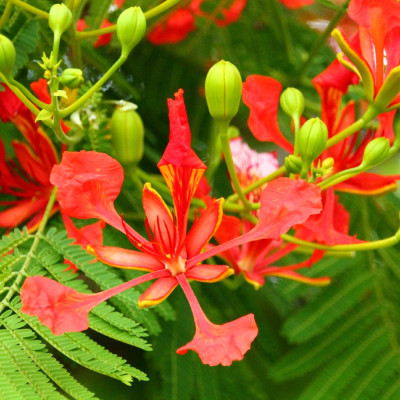
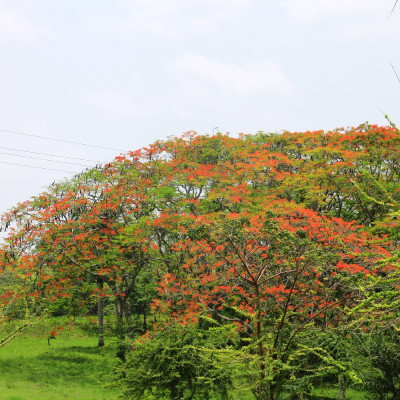
A scarlet sea of ​​flames

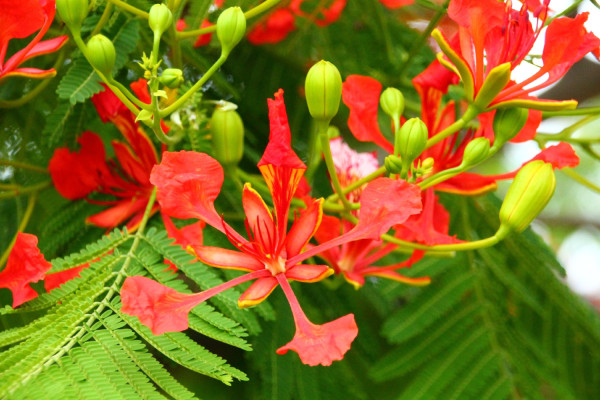
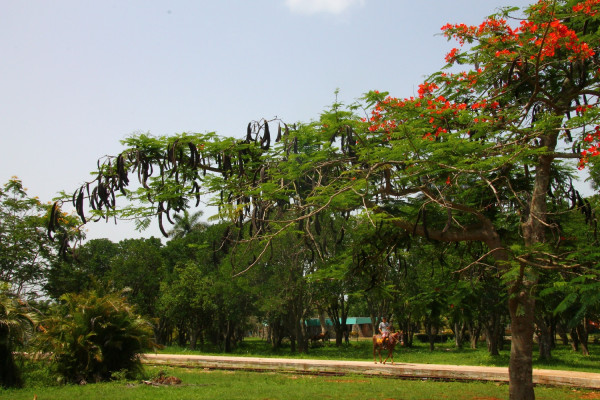
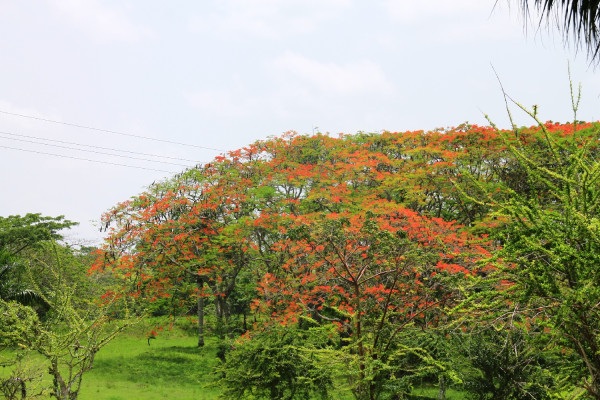
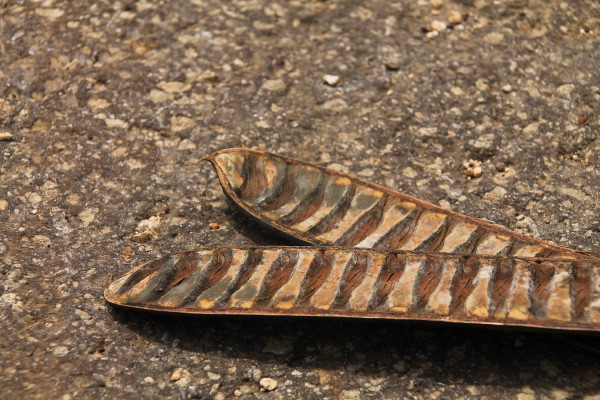
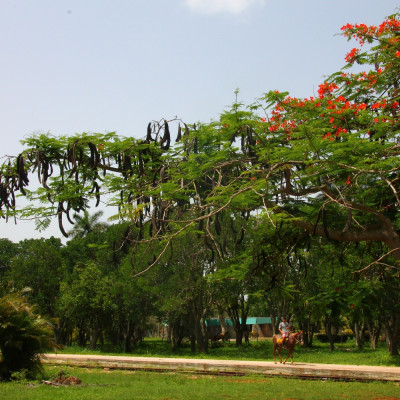
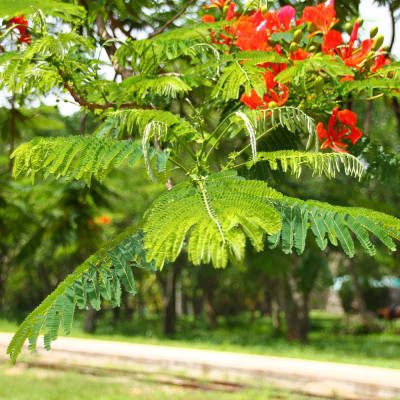
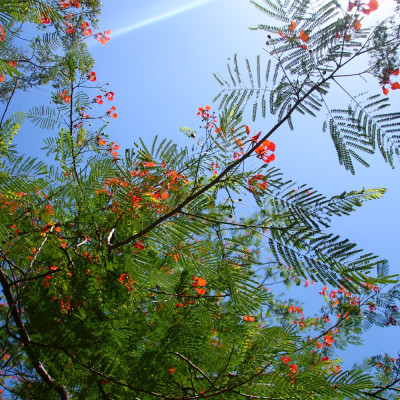
The Flame Tree, sometimes also called Flame of the Forest or Royal Poinciana, has become a true globetrotter, now found in the tropics and the Caribbean, as well as in the Canary Islands and Southern Europe. Its prominent crown makes it an ideal shade provider, often planted as a street or park tree. Its blossoms are spectacular, appearing from the age of six to eight years and radiating scarlet to orange like a sea of ​​flames. The very long, bipinnate leaves have up to a thousand rounded leaflets. The seed pods, which can reach up to 40 cm in length, are also impressive. The Flame Tree is very well suited for container cultivation.

Its natural habitat is considered to be the Caribbean Islands and Madagascar, where it was first recorded in 1824 by the Dutch botanist Wenceslaus Bojer.